Lexintenebris
Recent posts
-
Nuclear Power: The Fear of the Atom
There are few things we fear quite like the atom. It is invisible. It is powerful. And, in the twentieth century, it became synonymous with a mushroom cloud. But the same physics that gave humanity nuclear weapons also gave us something much quieter: electricity. A nuclear power plant does not explode like a nuclear bomb. Its basic principle is surprisingly ordinary. A nuclear reactor uses fissio…

-
Ecocide
The law has long protected people from violence. But what happens when the victim is the planet itself? For centuries, legal systems have evolved to recognise increasingly complex forms of harm. Once, only direct injuries to individuals mattered. Today, international law condemns genocide, crimes against humanity, war crimes, and the crime of aggression because their consequences extend beyond a …

-
Two Swords, One World: Dante Alighieri and the Struggle Between Empire and Church
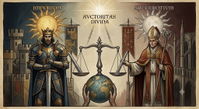
Throughout history, one question has repeatedly challenged political and legal systems: who has the right to rule? When two institutions claim authority over the same people, can they coexist, or must one inevitably dominate the other? In medieval Europe, this question took the form of a struggle between two universal powers: the Holy Roman Emperor and the Pope. The Emperor claimed authority over …
-
Rome and the Destruction of Carthage
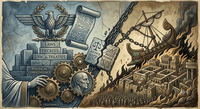
The destruction of Carthage marked the culmination of the Third Punic War. Following two devastating conflicts, the Treaty of Zama (201 BCE) imposed severe restrictions upon the Phoenician-founded city. Carthage was required to reduce its navy to just ten ships, surrender its overseas possessions and influence over Numidia, pay a substantial indemnity, and seek Rome's permission before declaring …
-
Divine law vs Human law
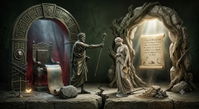
Ancient Greek tragedian Sophocles' Antigone is more than a theatrical masterpiece. It is one of the earliest explorations of a question that continues to challenge legal systems today: What should happen when the law commands one thing, but morality commands another? Following the fall of the royal house of Thebes, Oedipus' sons, Eteocles and Polynices, were meant to rule together by alternating …
-
The Korean Peninsula
Would it be just if a decision that shaped the rest of your life were made without your consent? Intuitively, no. Yet this has happened far more often than we might like to admit. In 1945, millions of Koreans woke up in the same country they had always known. Soon afterwards, they found themselves living on opposite sides of a border they had never voted for, negotiated, or even been consulted abo…

-
The Japanese Empire
Is it possible to separate a nation’s progress from the violence it uses to achieve it? And if progress is the result, does that risk making violence easier to justify? This question is not purely historical. It concerns how societies interpret the relationship between achievement and its cost: whether success can be evaluated independently from the methods used to obtain it. States often present …
-
The Mongol Empire
It is often believed that the conquests of Genghis Khan killed so many people that carbon dioxide levels in the atmosphere temporarily declined as abandoned farmland returned to forest. If true, the environmental outcome was beneficial. The human cost, however, was catastrophic. Genghis Khan did not wage war to protect the environment. He did not even know what carbon dioxide was. Yet his actions…

-
Slavery
Ever wonder whether you may be considered property or not? Most of you have not, thankfully, but many have. It is not a new question either. It has been asked and answered multiple times throughout history. What is disturbing is how often the answer has been in the affirmative. Today, such a notion seems unimaginable. To an African torn from his homeland and sold into slavery in South America, how…

-
Neocolonialism
Do you consider a person free if someone else controls their income, dictates how they spend their money, and determines which opportunities are available to them? Most people would answer no. Yet this question extends far beyond individuals. It applies equally to nations. For centuries, colonial powers exercised control through military conquest and direct political rule. Colonies were governed…

-
Epistemic Erasure and the Architecture of Knowledge
Do you ever wonder who created algebra — and why? Was it simply designed as a method of punishing students? To answer that, we have to look much further back in history. The Islamic Golden Age (8th–14th centuries) was a period of intense intellectual development. Centered in major cultural and scientific hubs such as Baghdad, Cairo, and Córdoba, and anchored by institutions like the House of Wisdo…

-
Damnatio Memoriae
Damnatio memoriae means “condemnation of memory". It refers to the ancient Roman practice of deliberately erasing a person from official history, public records, and visual culture after their death or political disgrace. How it worked in Ancient Rome: Official Erasing: The Roman Senate would declare a condemned leader an enemy of the state. Destruction of Imagery: Statues and portraits of the i…

-
Islamic and Western finance
Do you know what the extra money owed to a lender beyond the original sum is called? Interest. It is a cornerstone of modern Western financial systems, embedded in law, banking, and global markets. Yet in Islamic finance, it is strictly prohibited. Sharia is the religious law and moral code of Islam. Literally meaning “the clear, well-trodden path to water,” it governs many aspects of a Muslim’s …

-
Adelphoe
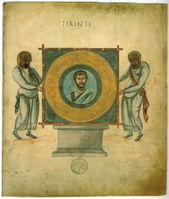
When is one too strict and when too liberal? This is a question that's been asked for more than two millennia. Ancient Rome hosted many playwrights and oratores, and one playwright stands out for his reflection on morals through his characters, typically parents and children, and his idea of humanitas. We remember his six plays for their unique elements: the break of the fourth wall and the dupl…
-
The trial of Galileo Galilei
Would it be lawful to arrest a scientist for discovering something that goes against what was previously believed? Intuitively, no. Then why was it acceptable to do so with Galileo Galilei? This blog's, Lex In Tenebris (law in the darkness), whole purpose is to analyse situations like these and question them, focusing on ethics, legislation and morality. In 1633, The Inquisition tries Galileo, f…